Chapter 9 of 12 · Manny's Care Guide
Mites
Disclaimer: I'm not a veterinarian and I don't hold a degree in animal science or animal care. This is a guide I compiled and use with my own ball pythons. For a sick animal, a reptile vet is the authority.
The short version
Snake mites are beaten by treating the snake, its tub and the whole room at the same time, then repeating every 3 to 7 days for at least 5 rounds, with bare paper-towel tubs and checks for 6 to 8 weeks in all. One treatment alone almost always fails, because mite eggs are laid off the snake, in the tub and rack, and survive most treatments. The vet schedules behind those numbers are in Step 2 [7][8][11]; the timeline, the soak temperature and the cleaning ratios are our own protocol built on them.
Method credit. The Dawn soak, the ivermectin-sprayed paper-towel tub and the dry start with no water come from QB's Tails & Scales' video Ball Python Care | Treating For Mites! Prevention & Quarantine (June 2023). Go watch it. This chapter adds the doses, the repeat schedule, the room work and the sources around that method.
Pick one spray plan, never both. The two that work: an ivermectin spray mixed under your vet's direction, or Provent-a-Mite used exactly as its label says. Stacking products is how treatment deaths happen.
The best treatments: pros and cons
Bottom line for a ball python rack: a Dawn soak plus the ivermectin paper-towel method every round is the core plan. Provent-a-Mite is the labeled alternative and the best choice for quarantine tubs. For a valuable or stubborn case, ask your vet about a single oral dose of afoxolaner.
| Treatment | Best for | Pros | Cons |
|---|---|---|---|
| Ivermectin 1% spray (paper-towel method) | The core treatment for a whole rack | Very cheap: one small bottle makes many litres. Kills mites on the towels, tub and snake. Long vet and breeder use. Scales to dozens of tubs. | Off-label, so it needs a vet's direction [9]. Deadly to turtles and tortoises; care with skinks and indigo snakes [7]. Settles out (shake every time) and breaks down in light (remake monthly) [8]. Little lasting effect, so you re-spray every round. Harmful to fish and waterborne life [21]. |
| Provent-a-Mite (0.5% permethrin) | Tubs when you want fewer applications; quarantine tubs | EPA-labeled for reptile cages. Keeps working, so you reapply only every 2 to 4 weeks. Ready to use, no mixing [14]. | Costs more per tub. Strict label: substrate only, water out, ventilate until fully dry, never on the snake [14]. Kills feeder insects for weeks [14]; permethrin is highly toxic to fish and cats are far more sensitive to it than dogs or people [22]. |
| Afoxolaner (NexGard), by a vet | Valuable animals, heavy loads, failed treatments | One oral dose cleared mites from snakes and their enclosures in a 2023 study, with no side effects reported [12]. No spraying the snake. | Prescription only and needs a vet visit. Not licensed for reptiles. One study; cleaning the tub and room is still cheap insurance. |
| Taurrus predatory mites (Cheyletus eruditus) | A chemical-free add-on, or follow-up after spraying | No chemicals. Hunts mites in cracks and rack gaps. Big drop in mites in a ball python trial [15]. | Mostly sold in the UK and EU. Killed by pesticides (wait 2 weeks after spraying) [16]. Slower than sprays. Doesn't replace cleaning. |
| Reptile Spray (Natural Chemistry / Miracle Care) | Spot-treating the snake between rounds | Labeled for use on reptiles. Mild: a surfactant (dioctyl sodium sulfosuccinate 2.1%) plus undecylenic acid 0.5%. Sold in pet stores [17]. | Weak evidence and no lasting effect. Not under 12 weeks of age. No more than every 3 days, and not for at least 6 hours after a shed [17]. |
| Black Knight roach spray (d-phenothrin) | An empty snake cage, as an old-school backup | Cheap and easy to find. Its label includes snake-mite directions [18]. | Snake cages only, not other reptiles. Strong: snake out until fully dry. No more than every 30 days. Never on the snake [18]. |
| Fipronil (Frontline spray), by a vet | Vet-run cases only | Worked in most animals in a vet case series [19]. | One death when left on too long. Must be washed off within 5 minutes [7]. Never near the head. Not for home use. |
The timeline
| When | Phase | What happens |
|---|---|---|
| Day 0 | Knockdown | Dawn soak for every snake; strip and treat every tub, rack and room the same day. |
| Days 1 to 2 | Dry tub, no water | Snake on treated, fully dried paper towels. Water bowl back after 24 to 48 hours. |
| Weeks 1 to 6 | Repeat every 3 to 7 days | Soak, fresh towels, re-treat (Provent only every 2 to 4 weeks). At least 5 rounds. |
| Weeks 6 to 13 | Watch and wait | Keep checking towels, water and the snake each week, and through at least one shed. |
| Day 90 | All clear | No mites for 6 to 8 weeks, including after a shed. Back to normal substrate. |
One treatment never finishes the job. Eggs hatch within days, and surviving females keep laying new batches for weeks, so the repeat rounds and the long watch are what actually end an outbreak.
The kit
Have everything on hand before you pull the first snake, so the whole room gets done in one day.
- For the snakes: ivermectin 1% injectable from or directed by your reptile vet (or Provent-a-Mite for the permethrin plan); an opaque spray bottle labeled with the date and "ivermectin, not for turtles"; a 1 mL syringe and a 1-litre or 1-quart jug; clean hospital tubs with ventilation holes, one per snake; lots of plain white paper towels; disposable hides; clean water bowls for after the dry period; a soaking tub and a water thermometer; original blue Dawn; a magnifier and clear tape.
- For the enclosures and room: heavy contractor bags for substrate; dish soap, scrub brushes, a scraper; unscented bleach for a 1:32 solution (about half a cup per gallon), or F10SC, for germs; a shop vacuum with a bag you can throw out; disposable gloves, a change of clothes, a laundry bag; masking or packing tape for sticky-side-out barriers.
Know the enemy
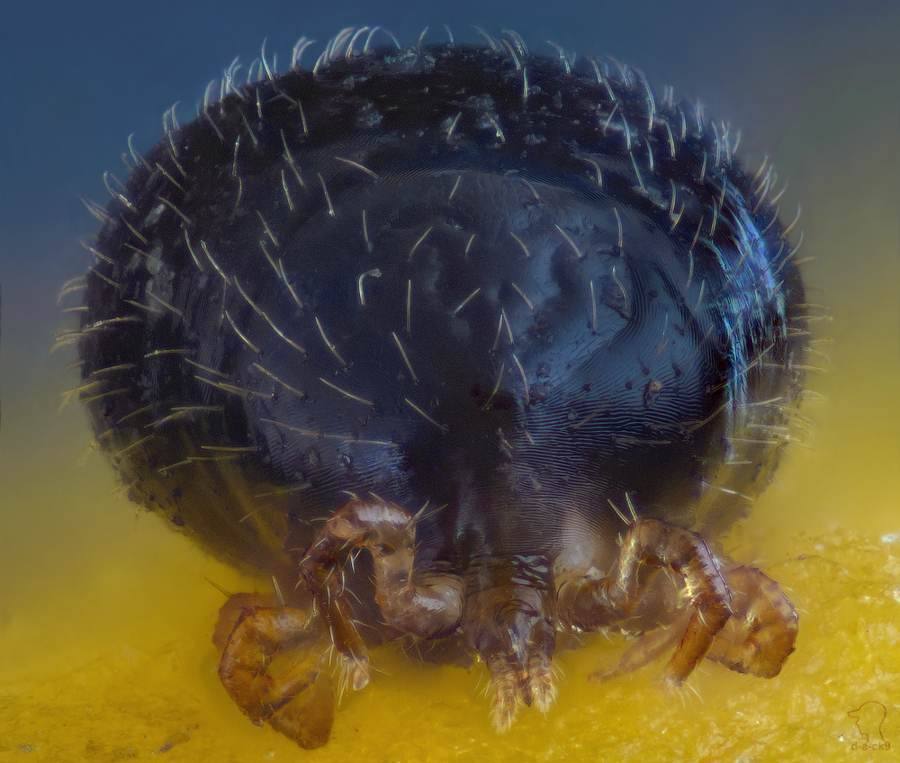
The snake mite, Ophionyssus natricis, is about 1 mm long (under 1.5 mm), pale when unfed and dark red to black after a blood meal: pepper with legs. Only some life stages feed on the snake; a fed female drops off and lays her eggs in dark cracks: about 20 at a time by one account, 60 to 80 over her life by another [2][3]. The cycle takes roughly one to three weeks depending on temperature, faster when warm [3][4]. Eggs need high humidity (about 85%) to hatch, mites can survive weeks to about three months without feeding, and they can cover about 15 feet in a day [2][3]. They ride on hands and clothes [1]. Water drowns mites, but eggs can survive being submerged [2].
Spotting them
The first sign is usually tiny black specks drowned in the water bowl, or a snake that suddenly soaks all the time [1][5]. Look around the eyes (the eye cap can look swollen), in the heat pits, under the chin, around the vent, and under raised scales. Fine white "ash" on the snake or the tub is mite droppings.
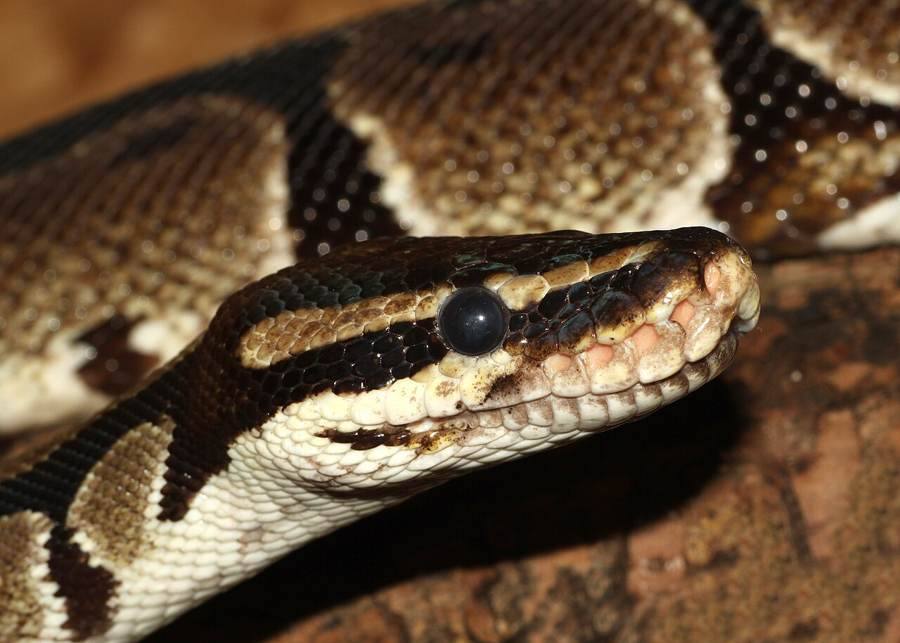
Checks at every feeding: wipe the snake head to tail with a damp white paper towel and look for specks that move; pour the water bowl over white paper; press clear tape on a suspicious scale and stick it to white paper. A cheap magnifier settles most questions. If it's white and slow, it isn't a snake mite: grain mites and springtails live in the substrate and are harmless.
Step 1: the snake
- Soak in a clean tub of lukewarm water, shallow enough that the head stays well above water, for 20 to 30 minutes (Dr. Wright says 30) [6]. We keep the water at 80 to 85 °F by thermometer. Never leave it unattended.
- Soap is required here, not optional. Two to three drops of original blue Dawn in a small tub (about a drop per quart). The soak with soap is the method from the video [10]. Dr. Kevin Wright uses the same principle for a water moat around a cage: a couple of drops of dish soap lowers the water's surface tension so mites drown faster instead of riding the surface [6]. Vet references don't call soap mandatory and plain water drowns mites too, but in this guide soap is the standard. Keep the soapy water away from the eyes, nostrils and heat pits.
- Rinse in clean lukewarm water and pat dry. Longer isn't better: multi-day soaks and strong soap mixes have killed snakes.
- Wipe and inspect head to tail with a damp white paper towel; lift mites off with a damp cotton swab.
- Into the hospital tub (Step 2) while you strip its old enclosure.
Step 2: the hospital tub (the ivermectin paper-towel method)
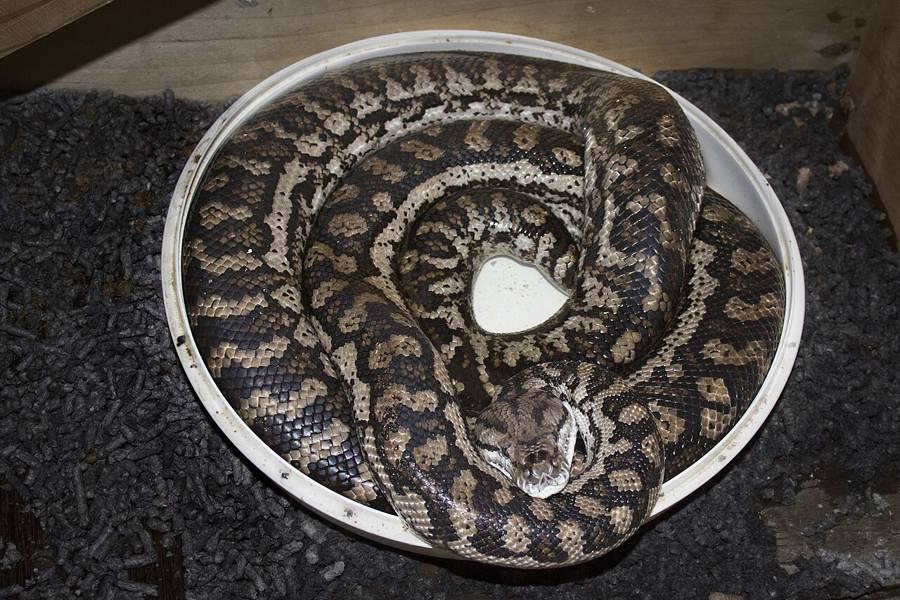
The mix. Injectable 1% ivermectin (10 mg per mL), the cattle product from the farm store, diluted in water: 0.5 to 1.0 mL per litre (that's 5 to 10 mg per litre, the Merck Veterinary Manual's range), which is 0.5 to 1.0 mL per quart or 2 to 3.8 mL per gallon [7][8]. Shake hard before every use (ivermectin barely dissolves in water and settles out), store it in the dark, label it with the date, and mix a fresh batch every 30 days [8].
Getting it legally. Using cattle ivermectin on a reptile is extra-label use. Under US federal law (AMDUCA) that's legal only on the order of a licensed vet who has a working relationship with you and your animals [9]. Ask your reptile vet to confirm the dilution and the plan, and write down who, when and how much.
The tub.
- Wash and dry a plastic tub. Lay two or three layers of plain white paper towels on the floor.
- Spray the towels until damp, not soaking, and lightly spray the inside walls and lid edges where eggs get laid.
- Let it dry completely, lid off, ideally overnight. The snake never goes onto wet spray.
- Add a clean disposable hide. No water bowl.
- Put the snake in. Normal heat stays on, with the thermostat probe and heat source dry and unsprayed.
Water timing. No water for 24 to 48 hours (the video's dry start; ReptiFiles' version withholds it for 24) [1][10]; a mite-covered snake soaks constantly, which washes off the treatment. Then a clean bowl. For hatchlings, small snakes, or any snake that looks dehydrated (wrinkled skin, sunken eyes), we keep it to 24 hours.
Every round, every 3 to 7 days. Fresh tub with freshly sprayed and dried towels; old towels sealed in a bag and binned; old tub washed and re-treated; snake soaked and wiped again. Do at least five rounds, then keep the bare paper-towel tubs and the checks going until six to eight clean weeks have passed. Vet schedules run from every 3 to 5 days for up to 28 days (Merck) to weekly for five rounds (the ACVD dermatology reference); Dr. Klingenberg says anything under eight weeks is unlikely to finish the job, and we side with the longer course [7][8][11].
Ivermectin warnings. Never on turtles or tortoises, even as a spray: it can paralyze and kill them [7][6]. Use care with indigo snakes and skinks [7]. Overdose signs are depression, stupor, tremors, poor coordination and seizures; stop and call a vet. Never spray it into a water bowl, and keep it out of drains: the product label warns it harms fish and the life they feed on [21].
Ask your vet about afoxolaner (NexGard) too. A 2023 study found one oral dose of 2.5 mg/kg cleared mites from 31 infested snakes, and their enclosures, with no side effects reported [12]. It's prescription-only and not licensed for reptiles.
Step 3: the enclosure, rack and room
Most mites and nearly all eggs are in the tub and rack, not on the snake. Do the whole rack or room in one day so mites can't walk back into cleaned tubs. Treat every snake and every tub in the room, not just the ones with mites you can see; this is the step most people skip, and it's why mites come back [7][13].
- Substrate, paper towels and cardboard hides: bag it, tie it off, take it outside. Don't reuse it.
- Wood and cork: throw out, or bake at 200 to 250 °F for 2 to 3 hours [3]. Rocks and ceramics: boil 20 to 30 minutes.
- Plastic tubs, enclosures, bowls and hides: scrape, vacuum, wash in hot soapy water, bleach about 1:30 (half a cup per gallon) for 10 minutes [3], rinse, dry.
- Fabric and your clothes: hot wash, hot dryer. Small items you can't wash: seal in a bag and freeze for at least a week (keeper practice; heat above about 122 °F is the sourced kill [2]).
- Disinfectant isn't a mite treatment. Bleach, F10 and chlorhexidine kill germs, not reliably mites or eggs. Scrubbing and rinsing remove mites; the spray or heat kills what's left.
- Then treat the clean, dry tub. Ivermectin plan: spray corners, seams and lid edges, lay towels, spray them, dry overnight. Provent plan: lay the towels first, take the water out, spray only the substrate from 12 to 15 inches away, about a second per square foot, ventilate until completely dry, then the snake and water go back; reapply every two to four weeks [14].
- Never spray heat tape, heat panels, the thermostat or probes. The Provent label forbids it, and the ivermectin mix doesn't belong there either. Unplug, wipe probes and cords with soapy water then alcohol, and let everything dry before power goes back on [14].
- The rack: pull every tub, vacuum the shelves, heat-tape channels and gaps, wipe with hot soapy water, steam if you have a steamer (off the heat tape), let it dry.
- The room: vacuum floors and corners and bin the bag sealed; wash shelves and a two-foot strip of floor around each rack. Optional: tape around rack legs and doorways, sticky side out. Change clothes and wash up before going into any other snake room.
Stay on paper towels, no loose substrate, until day 90. Don't sell or move animals until then.
The other treatments, in one table
| Treatment | Verdict |
|---|---|
| Ivermectin spray (above) | Core method. Cheap, scales to a whole rack, needs a vet's direction. |
| Provent-a-Mite (0.5% permethrin, EPA Reg. 73617-1) | Core alternative and the best choice for quarantine tubs. The only spray labeled for snake, lizard and tortoise cages; follow the label exactly, substrate only, never on the snake, water out, dry before the snake returns, reapply every 2 to 4 weeks; kills feeder insects for weeks [14]. Highly toxic to fish, and cats are far more sensitive to it than dogs or people [22]. One disagreement to know about: the ACVD dermatology reference says pyrethroids should be avoided in reptiles and Wildlife Health Australia advises caution, while Merck notes permethrin is licensed for reptile use [2][7][11]. We follow the label and Merck. |
| Afoxolaner (NexGard), by a vet | For valuable animals, heavy loads or failed treatments. One oral dose in the 2023 study [12]. |
| Taurrus predatory mites (Cheyletus eruditus) | Chemical-free add-on; a 2013 trial on 11 ball pythons found about 2 mites per snake after 15 days versus 48 on untreated snakes [15]. Mostly UK and EU supply; killed by pesticides, so wait two weeks after spraying [16]. |
| Reptile Spray (Natural Chemistry / Miracle Care) | Labeled for use on the snake; a mild surfactant spray; spot use only. Not under 12 weeks of age, no more than every 3 days, and not for at least 6 hours after a shed [17]. |
| Black Knight roach spray (d-phenothrin) | An old breeder backup. Its label carries snake-mite directions for snake cages only: snake and water out, back only when dry, no more than every 30 days, never on the snake [18]. |
| Fipronil (Frontline) | Vet only. One iguana died in the case series when it was left on 10 minutes; Merck says wash off within 5 minutes [7][19]. |
| Olive oil, diatomaceous earth | Don't. Weak, messy, and dust in the eyes and lungs. |
Never use: No-Pest Strips or anything with dichlorvos. Merck lists a dichlorvos-strip protocol only with the vivarium emptied and flags it as toxic; Anapsid, quoting Dr. Mader, strongly discourages them; Dr. Wright allows a strip in a sealed bag for decor only. We don't use them at all [3][6][7]. Keep any pesticide off the face and open mouth, and off a severely debilitated snake [3]. The rest of this list is keeper practice, ours included: no foggers or flea bombs; no dog or cat flea collars, drops or sprays on your own; no Sevin, cedar or mothballs; never two pesticides at once; nothing on a wet or dehydrated snake.
Safety: snakes, other animals, and you
For the snake: one pesticide plan at a time. Dry means dry: never a snake on wet towels. Hydrate first (water back after 24 to 48 hours; 24 for hatchlings or thin snakes). Keep chemicals off the face. Watch for 24 to 72 hours after each round and stop for a vet if you see twitching or tremors, a snake that can't right itself, stargazing, a limp body, unusual mouth gaping or no response to touch. Weak, tiny, gravid or sick snakes get the gentlest version: soaks, clean paper towels, very light treatment, and a vet's input.
| Animal | Ivermectin | Permethrin (Provent) |
|---|---|---|
| Turtles and tortoises | Never. Causes fatal paralysis [6][7]. | The Provent label covers tortoise cages and even direct use on tortoises [14]; keep the spray off every other reptile |
| Indigo snakes, skinks (including blue-tongues) | Caution: vet advice first (Merck says "use care") [7] | Caution |
| Other lizards | No specific warning in the vet references; use only under vet direction | Label allows lizard cages; never spray directly on them [14] |
| Amphibians, tarantulas and scorpions, feeder insects, bioactive cleanup crews | Keep away | Keep away; a treated tub keeps killing insects for at least 2 weeks [14] |
| Cats | Keep away from the mix | Far more sensitive than dogs or people [22]. Keep cats out of treated rooms until dry. |
| Dogs (herding breeds like collies) | Some carry the MDR1 mutation and are very sensitive to ivermectin [23]; keep the mix away | Low risk |
| Fish and aquatic animals | Harmful [21] | Highly toxic [22]. Never near tanks or drains. |
| Feeder rodents | Keep apart | Keep apart |
For you: nitrile gloves when mixing or spraying; spray in a ventilated room, never over food or feeders; label every bottle; don't pour mixes down drains or near water; use small batches and remake every 30 days. Snake mites can bite people (the young stages do, and it itches), but they don't complete their life cycle on us [2][4][20]. They ride on hands, sleeves and clothes to the next room, so wash up and change before going to clean animals [1].
Health risks and the vet
| Risk | What happens | How sure is this |
|---|---|---|
| Anemia | Blood loss leads to weakness, a pale mouth, and in hatchlings and small snakes, death | Well documented [2][5] |
| Stress and poor feeding | Constant irritation; snakes soak for days, stop eating, lose weight | Well documented [1][5] |
| Skin damage and bad sheds | Bite wounds, raised scales, stuck shed, skin infections | Well documented [5] |
| Spreading bacteria | Mites carry Aeromonas hydrophila between snakes, a cause of septicemia | Shown experimentally by Camin in 1948; Merck calls the mite a mechanical vector [4][7][20] |
| Inclusion body disease (IBD, arenavirus) | Mites are suspected of helping spread it in collections | Suspected, not proven [2][20] |
| Blood parasites (Hepatozoon) | The parasite has been found in snake mites by molecular testing | One South American study identified the mite as a potential vector [4][24] |
Every mite drinks blood, and a heavy load on a small snake adds up fast. See a vet for a pale pink or white mouth, weakness or a snake that hangs limp, refusing food through treatment or losing weight, swollen or crusted eyes, red or wet skin, repeated bad sheds, a heavy load on a hatchling, or mites still present after three proper rounds. A vet can dose ivermectin for the snake's weight, use options you can't get otherwise (afoxolaner, fluralaner, fipronil protocols), check for anemia and infection, and document the treatment, which matters if you sell animals.
Prevention
Almost every outbreak starts with a new animal, a used item, or a visit to somewhere other snakes live. Assume every new animal has mites, from any source. Quarantine 60 to 90 days (we use 60 for adults from known breeders, longer for unknown history) in a separate room on paper towel with its own tools (the Quarantine chapter); soak on arrival and check the water; handle quarantine animals last; check every snake at every feeding; clean and treat any used rack, tub or decor before it enters the room; wash up and change clothes after expos [1][6][13].
Sources for this chapter
- ReptiFiles, Ball python mites
- Wildlife Health Australia, Snake mite (Ophionyssus natricis) fact sheet (PDF)
- Kaplan, M., Mites, Anapsid.org
- Orlova, M. V. et al. (2024), "Review of the distribution and biology of the snake mite Ophionyssus natricis," Acarologia, doi:10.24349/gmr0-8m9o
- Merck Veterinary Manual, Disorders and diseases of reptiles
- Wright, K. (DVM), Causes, prevention and treatment of snake mites, Reptiles Magazine
- Merck Veterinary Manual, Parasiticides used in reptiles and Parasitic diseases of reptiles
- Klingenberg, R. (DVM), Using ivermectin for external parasites, Reptiles Magazine
- AVMA, Extralabel drug use and AMDUCA FAQ
- QB's Tails & Scales (YouTube), Ball Python Care | Treating For Mites! Prevention & Quarantine, June 30, 2023
- American College of Veterinary Dermatology, Dermatologic disorders of reptiles (2022 reference) (PDF)
- Parasites & Vectors (2023), afoxolaner against Ophionyssus natricis in snakes, doi:10.1186/s13071-022-05611-1
- ball-pythons.net, Mites with a large collection? (breeder thread)
- US EPA, Provent-a-Mite label, EPA Reg. No. 73617-1 (PDF)
- Schilliger, L. et al. (2013), Cheyletus eruditus (Taurrus) as a biological control for the snake mite in ball pythons, Journal of Zoo and Wildlife Medicine 44(3), PubMed 24063093
- Taurrus predatory mites
- Natural Chemistry / Miracle Care, Reptile Spray label
- US EPA, Black Knight label, EPA Reg. No. 901-82 (PDF)
- Fipronil case series, VIN proceedings
- Camin, J. H. (1948), "Mite transmission of a hemorrhagic septicemia in snakes," Journal of Parasitology 34(4): 345–354; WikiVet, Snake mite infestation
- Boehringer Ingelheim, Ivomec 1% injection label via Drugs.com ("free ivermectin may adversely affect fish and certain waterborne organisms")
- National Pesticide Information Center, Permethrin general fact sheet
- Washington State University, Program in Individualized Medicine (MDR1 testing)
- Mendoza-Roldan, J. A. et al. (2021), "Snake mites as potential vectors of Hepatozoon," Ticks and Tick-borne Diseases 12: 101585, doi:10.1016/j.ttbdis.2020.101585