Chapter 1 of 11 · ASF Breeding Guide
Start here
Disclaimer: I'm not a veterinarian and I don't hold a degree in animal science or animal care. This is a guide I compiled for raising feeder rodents for my own snakes. Follow your local laws, and ask a vet about sick animals.
The short version
- ASF are small African rodents. They are bigger than a mouse and smaller than a rat. Their science name is Mastomys.
- Some picky ball pythons that won't eat mice or rats will eat ASF. Nobody has proven why.
- Bringing ASF into the US is banned, even ones bred in Canada or Europe. ASF already bred in the US are fine. Some states, like California and Hawaii, have their own rules, so check your state and town first.
- Rodents can carry germs that make people sick, even when frozen. Wear gloves, wash your hands, keep wild mice out, and keep young children away.
- Every number in this guide comes from research, from hobby breeders (marked "hobby"), or from what we do ourselves.
- Daniel of Monroe Morphs LLC bred ASF for years on five racks and shared what worked and what didn't. His advice is marked "Daniel's experience" where we use it. Thank you, Daniel.
What ASF are
African soft-furred rats (ASF) are Mastomys, the multimammate mice of sub-Saharan Africa [1][2]. Feeder ASF are usually sold as Mastomys natalensis. But a 2021 NIH paper says genetic tests have shown feeder ASF to be the closely related M. coucha [1]. You can't tell the two apart by looking; it takes a lab test [2]. So treat "ASF" as a trade name. For keeping, the two need the same care as lab mice and rats [2]. But they are separate species, and crosses between them are reported to give sterile young [2]. If two lines you pair up never produce a litter, this may be why.
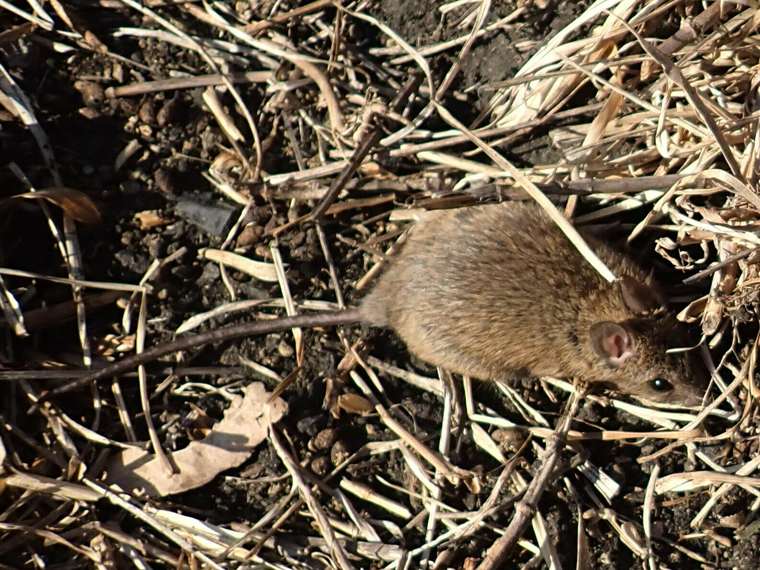
Adults are between a mouse and a rat in size: in one lab colony, 90-day-old males averaged 78 g and females 54 g [3]. Feeder lines often run bigger [4].
Why snake keepers breed them
- Picky ball pythons. Some ball pythons that refuse mice and rats will take ASF. Why isn't proven; it's keeper experience, not research [5].
- Supply. Live and frozen ASF can be hard to find. A small colony of your own means you know exactly what your feeders ate and how they were kept.
- Nutrition. There's no published nutritional analysis of ASF as feeders. Keepers describe them as comparable to mice and rats, but that hasn't been measured [5][6].
The legal basics (US)
- Importing ASF is banned. Federal rules ban bringing in any rodent whose native home is Africa, even one bred in Canada or Europe. CDC permits are only for science, exhibits or education, not pets or feeders (42 CFR 71.56, from the 2003 monkeypox outbreak) [7]. ASF already bred in the US aren't affected; the FDA dropped its rules on owning and moving them inside the US in 2008 [8].
- Some states restrict them. California lists all rodents except a short list of domestic kinds as "detrimental" animals. You can't keep ASF there without a state permit, and those permits are for labs, zoos, exhibitors and licensed animal businesses, not pet or hobby keepers [9][13][14]. Hawaii allows only listed animals, and Mastomys isn't listed [10][15].
- Check your state and town before you start, especially if you plan to sell.
People safety in one paragraph
Feeder rodents, live or frozen, can carry Salmonella, and freezing doesn't kill it [11]. Rodent colonies can also catch a virus called LCMV (lymphocytic choriomeningitis virus) from wild house mice. In 2012 it spread at a feeder business and infected about a third of the workers tested [12]. Gloves, hand-washing, keeping wild mice out, and keeping young children away from feeders handle most of the risk. Health and safety has the details.
How to read this guide
Every number in it is one of three things:
- Lab-animal research or a veterinary or government source. Cited with a link. There isn't much published on Mastomys husbandry; the few lab colonies that published their records are used throughout.
- A breeder or care-sheet source. Marked as hobby. Breeders know the animals best, but their numbers often disagree with each other and with the lab papers, and where they do, the chapter says so.
- Our plan. How we are setting up our own colony. These are the choices we have made, not results we can report yet.
Sources for this chapter
- Safronetz, D. et al. (2021), establishing a Mastomys natalensis breeding colony, Viruses, PMC8065687
- Hasche, D. and Rösl, F. (2019), Mastomys species as model systems for infectious diseases, Viruses, PMC6409723
- Kagira, J. M. et al. (2005), a laboratory-bred Mastomys colony, Scandinavian Journal of Laboratory Animal Science, PDF
- ASF Breeding Hub, ASF Care File v1.2 (hobby, 2021)
- FurryCritter, African soft-furred rats (hobby site)
- Dierenfeld, E. S., Alcorn, H. L. and Jacobsen, K. L. (2002), nutrient composition of whole vertebrate prey fed in zoos, PDF (mice, rats and other prey; no ASF data)
- 42 CFR 71.56, African rodents
- Federal Register, September 8, 2008, removal of domestic restrictions
- California Code of Regulations, 14 CCR §671, restricted species
- Hawaii Administrative Rules §4-71-6.5, introduction of animals
- FDA, Salmonella, feeder rodents and pet reptiles
- CDC, LCMV at a rodent breeding facility (2012)
- California Code of Regulations, 14 CCR §671.1, permits for restricted species
- California Department of Fish and Wildlife, Restricted species permits
- Hawaii Department of Agriculture, List of conditionally approved animals