Chapter 5 of 11 · ASF Breeding Guide
The breeding cycle
Disclaimer: I'm not a veterinarian and I don't hold a degree in animal science or animal care. This is a guide I compiled for raising feeder rodents for my own snakes. Follow your local laws, and ask a vet about sick animals.
The short version
- Most hobby breeders start pairing ASF at 8–16 weeks old. Split young ones into boys and girls by about 5 weeks so they don't breed too soon.
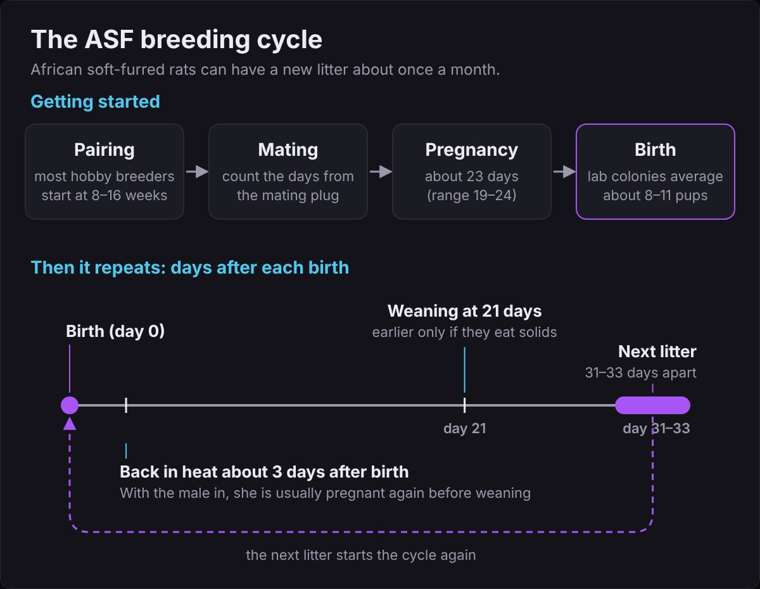
- A female is pregnant for about 23 days. Lab colonies averaged 8 to 11 babies per litter.
- She can mate again about 3 days after giving birth. If the male stays, a new litter often comes every 31–33 days.
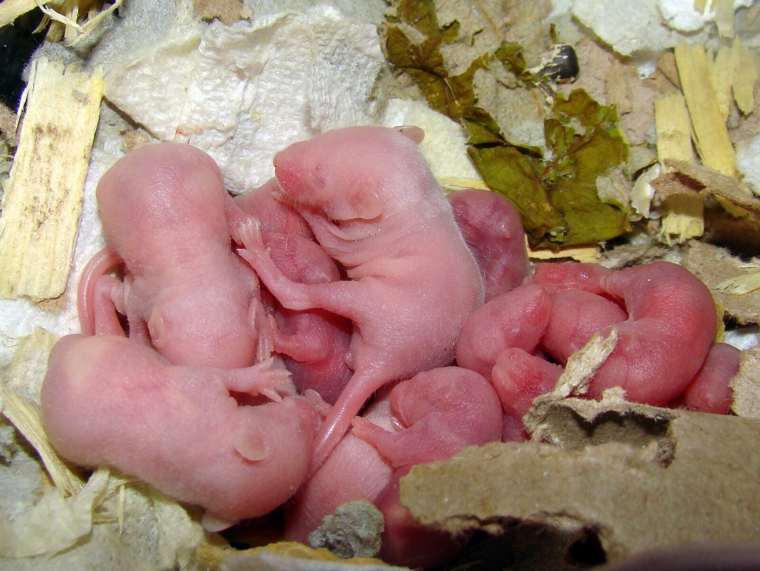
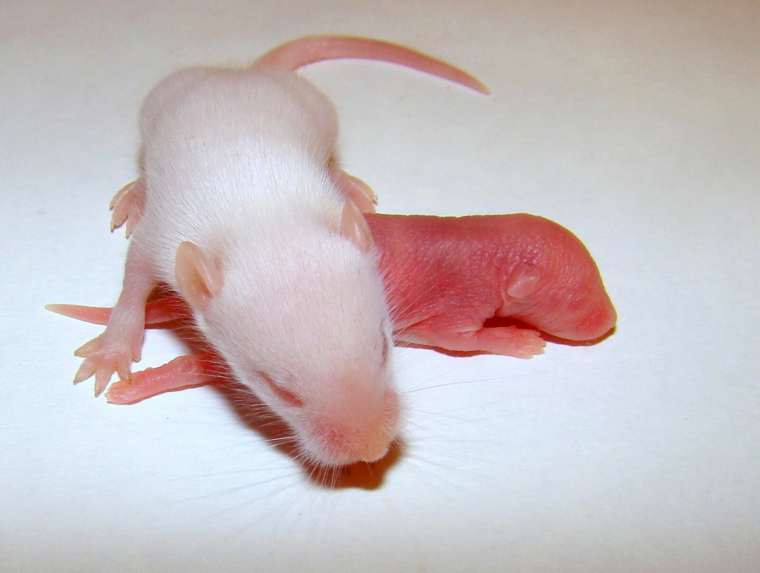
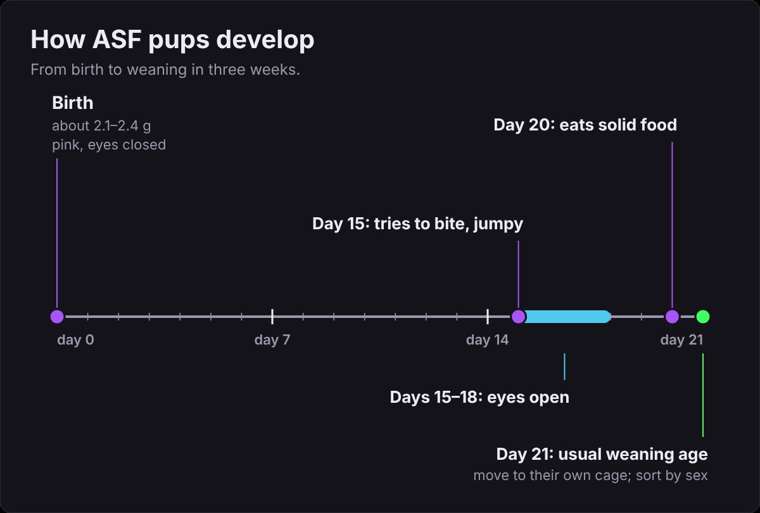
- Babies are born pink with their eyes closed. Their eyes open around day 15–18, and they eat solid food by day 20.
- Move babies to their own cage at about 21 days old. Only wean earlier if you can see them eating solid food.
When they're ready
The studies disagree, partly because lab and feeder lines differ:
- Lab animals averaged about 4 months to maturity [1].
- The youngest first litter on record came at 77 days old. That means the female mated at about 54 days old [2][3].
- Hobby breeders say breeding is possible at 5–6 weeks, but most start at 8–16 weeks, typically 12–16 [4].
Separate young by sex by about 5 weeks so grow-outs don't start breeding on their own. Hobby breeders report breeding as young as 5–6 weeks [4], and lab pups were already trying to mate by day 36 [3].
Gestation and birth
- Gestation: about 23 days, range 19–24, counted from the mating plug [5][2]. Another colony reported 19–21 days [1].
- Litter size: lab colonies averaged 8 to 11 pups, ranging from 2 to 17 [1][5][3]; one captive colony averaged only 6 [6]. In one colony, a female's 3rd, 4th and 5th litters were her biggest, and litters got smaller as females got older [5]. The NIH colony saw no drop with the mother's age [1].
- Teats: 8 or more pairs, far more than a mouse, which is why big litters are normal [6][8].
Rebreeding right after birth
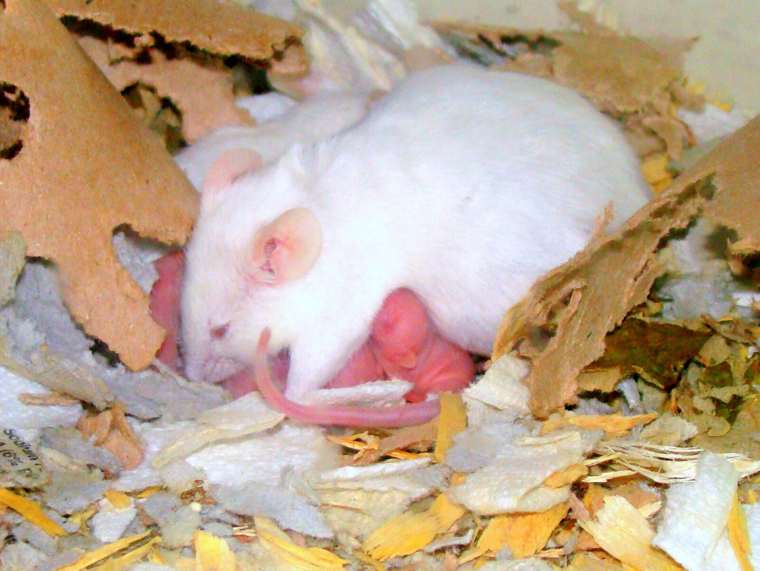
Females come back into heat about 3 days after giving birth [2], and in one study post-partum heat was "very common" [7]. If the male stays in the cage, she is usually pregnant again before the first babies are weaned. So new litters often come about 31–33 days apart; the shortest gap recorded was 29 days [2][3].
Should the male stay? In the NIH colony both parents cared for the pups, the father looked after the older ones, and back-to-back litters were common and "did not appear to be a problem" [1]. The risk in a small cage is the older litter trampling the newborns, which is why weaning on time matters.
How pups develop
| Age | What you'll see | Source |
|---|---|---|
| Birth | about 2.1–2.4 g, pink, eyes closed | [5][2] |
| Day 15 | start trying to bite, jumpy | [3] |
| Day 15–18 | eyes open | [3] |
| Day 20 | eating solid food | [3] |
| Day 21 | usual weaning age | [5][2] |
Weaning
Move pups to their own cage at about 21 days. The NIH colony weaned as early as 16–20 days when the next litter was due [1], but pups only start eating solid food around day 17 to 20 [3]. If you must wean early, wait until you see them eating, and put food and a shallow water dish on the cage floor [4]. Hobby breeders say 3 weeks is possible and 4 weeks is better [4]. Sex the pups and sort them at weaning.
Step by step: from pairing to weaning
- By about 5 weeks old, separate young animals by sex.
- Pair them when they're ready. Our plan is to pair at 10–12 weeks, with females at least about 45 g, in a clean cage, and to watch for half an hour and separate them at the first sign of blood.
- Expect the birth about 23 days (19–24) after the mating plug.
- About 3 days after the birth, the female comes back into heat. If the male stays, expect the next litter about 31–33 days after the first.
- Watch the pups grow: eyes open around day 15–18, eating solid food by day 20.
- Wean the pups into their own cage at about 21 days. If you must wean early, wait until you see them eating, and put food and a shallow water dish on the cage floor.
- Sex the pups and sort them at weaning.
What a female produces
No study reports weaned pups per female per month, so this is our estimate, not a measured number. In lab colonies, litters came about every 31–33 days [2] with about 8 pups each [5][2]. Between about half and three-quarters of pups lived to weaning in the colonies that counted [6][3]. That works out to about 3 to 6 weaned pups per female per month. It only counts a female in her best months: first litters are smaller [1], new pairs can take weeks to start [1], and older females slow down [5]. A cold room or poor food cuts it further.
Sources for this chapter
- Safronetz, D. et al. (2021), Viruses, PMC8065687
- Lamb, C. E., maternal protein intake and pup development in Mastomys, MSc dissertation, University of Pretoria, repository record (published as Lamb and van Aarde 2001, Journal of Zoology, on M. coucha)
- Baker, C. M. and Meester, J. (1977), Zeitschrift für Säugetierkunde, PDF
- ASF Breeding Hub, ASF Care File v1.2 (hobby, 2021)
- Kagira, J. M. et al. (2005), Scandinavian Journal of Laboratory Animal Science, PDF
- Reproductive characteristics of three sympatric Mastomys species in Senegal, Mammalia (1996), PDF
- Choate, T. S. (1972), Zoologica Africana, PDF
- Hasche, D. and Rösl, F. (2019), Mastomys species as model systems for infectious diseases, Viruses, PMC6409723